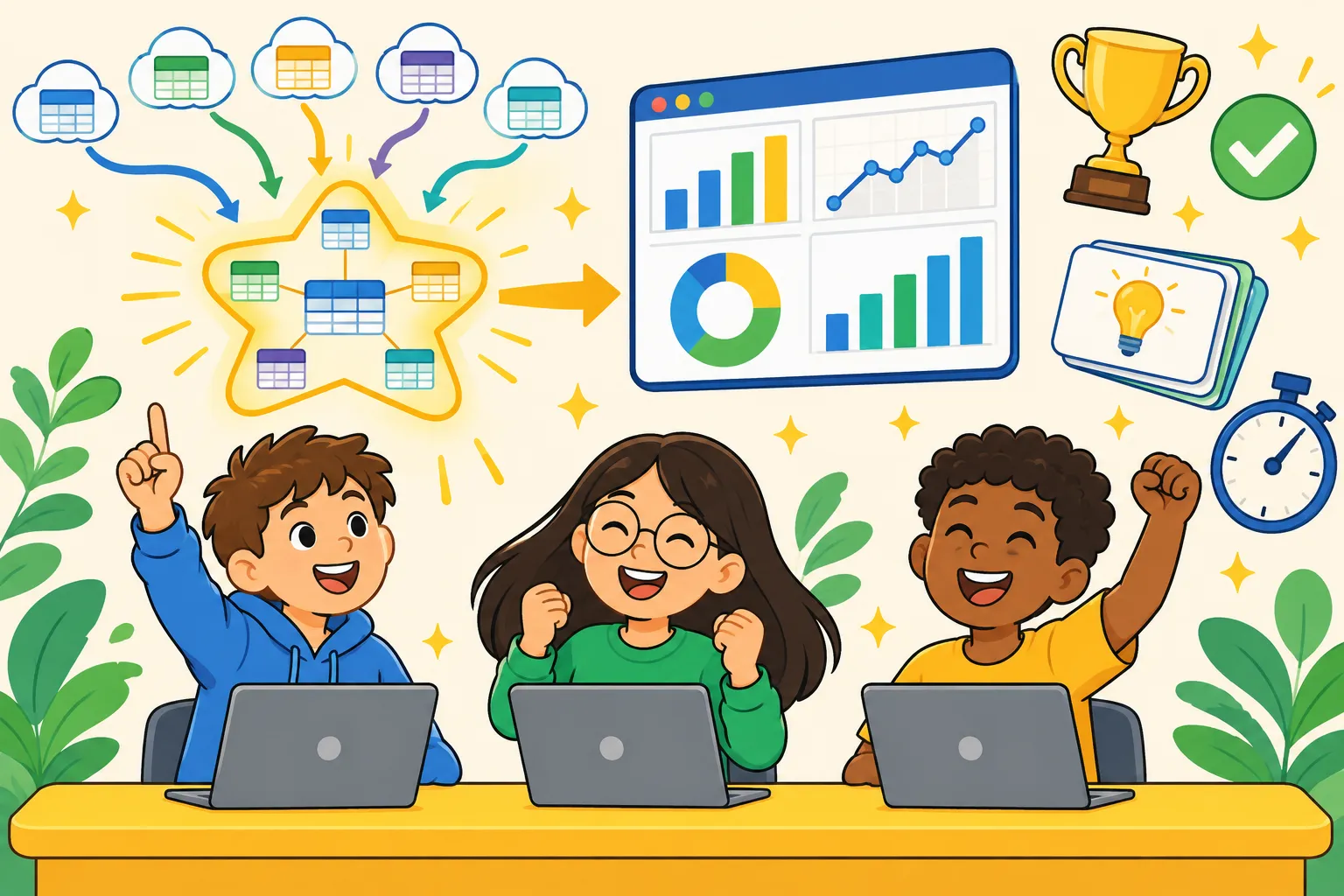
DP-600 exam prep: Microsoft Fabric Analytics Engineer, from zero to pass
The complete DP-600 exam preparation course, free. Start from zero, learn every skill Microsoft measures, then pass two timed mock exams.
35 lessons · about 14 hours · Free
Leaderboard
Loading…
50 XP for each lesson you finish, 10 for each right answer. Names show only for learners who turn on Show me on leaderboards.

About the instructor
Venky
Free, complete courses for people learning on their own time. Every lesson is checked against the official documentation and cites the page each fact comes from.
3 courses · 97 lessons
What it is
Free DP-600 exam prep for the Microsoft Fabric Analytics Engineer Associate: 35 lessons on data prep, SQL, DAX, KQL and semantic models, plus two timed mocks.
DP-600 covers data prep, SQL, KQL, DAX, semantic models and deployment, and the official docs link deeper at every step, so it's easy to study the wrong things for weeks. This course teaches exactly what the exam measures, at the depth it measures it: scenario quizzes that explain every option, flashcards for daily review, lessons you can listen to, a leaderboard to keep you going, and two 100-minute mock exams in the real format.
What you'll be able to do
- Pass DP-600 by studying the exact skills Microsoft measures, at the depth the exam needs
- Prepare data in Fabric with Dataflow Gen2, SQL, PySpark and KQL, and choose the right store
- Build star-schema semantic models with the right storage mode, relationships and DAX
- Make Direct Lake and Import models fast, fresh and secure at enterprise scale
- Secure, version and deploy analytics items from development to production
Who it's for
Anyone taking DP-600, including people with no cloud or Power BI background; module 1 covers the basics and a quick check tells you what to skip.
Not for Power BI report design (that's PL-300) or for data pipeline engineering (that's DP-700).
How it starts
It's Monday at Juniper Coffee, a chain of 120 cafés in four regions. You've just joined as its analytics engineer. Finance wants one sales report it can trust. Each store manager must see only their own region. The till data, the loyalty app and the budgets all sit in different places.
DP-600 is Microsoft's exam for the Microsoft Certified: Fabric Analytics Engineer Associate certification. Its full title is Implementing Analytics Solutions Using Microsoft Fabric.
Microsoft Fabric is Microsoft's online analytics platform: storage, data prep and Power BI reports in one…
What you'll learn
Start here: cloud, data, Fabric and Power BI basics
- Start here: the exam, the plan and what you already know
See what DP-600 tests, how this course gets you to a pass, and where you should start.
- Cloud in plain words: SaaS, PaaS, IaaS and where Fabric fits
Explain what the cloud is and why Fabric is a SaaS product, so later lessons make sense.
- Data basics: files, tables, formats and the lakehouse idea
Tell files from tables, pick the right format, and see why Fabric stores tables as Delta.
- A tour of Microsoft Fabric: OneLake, workspaces and items
Name every Fabric item an analytics engineer uses and how they share one copy of data.
- Power BI in plain words: semantic models, reports and DAX
See what a semantic model is, how Power BI Desktop and the service work together, and where DAX fits.
- Start here: the exam, the plan and what you already know
Prepare data: get data in (exam area 2, 45-50%)
- Connect to data and find it: connections, gateways, OneLake catalog and Real-Time hub
Create data connections, know when a gateway is needed, and discover data with OneLake catalog and Real-Time hub.
- Choosing a data store: lakehouse, warehouse or eventhouse
Pick the right Fabric store from the data, the team's skills and the workload.
- Use data without copying: shortcuts, mirroring and OneLake integration
Access data where it lives with shortcuts and mirroring, and make Eventhouse and semantic model data available in OneLake.
- Ingest data: Dataflow Gen2, pipelines, Copy job and notebooks
Pick the right tool to bring data into Fabric and land it in a lakehouse or warehouse.
- Power Query in Dataflow Gen2: filter, data types, merge and new columns
Shape data in Power Query: filter rows, set types, merge and append queries, add columns.
- Messy data: duplicates, missing values and nulls
Find and fix duplicate, missing and null data in Power Query, SQL and PySpark before it reaches a model.
- Connect to data and find it: connections, gateways, OneLake catalog and Real-Time hub
Prepare data: transform and query (exam area 2)
- Views, functions and stored procedures in T-SQL
Create views, functions and stored procedures in a warehouse and know what the SQL analytics endpoint allows.
- Build a star schema in a lakehouse or warehouse
Turn source tables into fact and dimension tables with surrogate keys and slowly changing dimensions.
- Aggregate, join and enrich: SQL and PySpark side by side
Join, aggregate and add new columns or tables with T-SQL and PySpark in Fabric.
- Query with the Visual query editor and SQL
Select, filter and aggregate data in the Visual query editor and the SQL query editor.
- Query with KQL
Select, filter and aggregate data in an eventhouse with KQL.
- Query with DAX: DAX query view and EVALUATE
Select, filter and aggregate data with DAX queries in DAX query view.
- Views, functions and stored procedures in T-SQL
Design and build semantic models (exam area 3, 25-30%)
- Choose a storage mode: Import, DirectQuery, Direct Lake and Dual
Pick the right storage mode for a semantic model table from size, freshness and source.
- Relationships: star schemas, bridge tables and many-to-many
Build relationships with the right cardinality and filter direction, including bridge tables and many-to-many.
- DAX foundations: measures, filter context, CALCULATE and variables
Write measures with CALCULATE and variables and predict what they return in a visual.
- DAX functions the exam tests: iterators, table filters, windows and information functions
Use iterators, table filtering, window functions and information functions in measures.
- Calculation groups, dynamic format strings and field parameters
Cut measure sprawl with calculation groups, format measures dynamically, and let users swap fields.
- Composite models and large semantic model storage format
Combine storage modes and sources in a composite model and know when to turn on large model format.
- Choose a storage mode: Import, DirectQuery, Direct Lake and Dual
Optimize models, then secure them (exam areas 3 and 1)
- Direct Lake in depth: fallback, refresh and the two flavors
Configure Direct Lake, control DirectQuery fallback and refresh, and choose between Direct Lake on OneLake and on SQL analytics endpoint.
- Incremental refresh for semantic models
Set up incremental refresh with RangeStart and RangeEnd so big models refresh only new data.
- Faster reports and DAX: finding and fixing slow queries
Find slow visuals and DAX with Performance analyzer and DAX query view, and fix them.
- Who can see what: workspace roles and item permissions
Assign the right workspace role or item permission with least privilege.
- Fine-grained security: rows, columns, objects and files
Restrict rows, columns, tables and files in warehouses, lakehouses and semantic models.
- Governance: sensitivity labels and endorsement
Apply sensitivity labels to Fabric items and endorse trusted items.
- Direct Lake in depth: fallback, refresh and the two flavors
Lifecycle, then exam practice (exam area 1)
- Version control: Git integration and Power BI projects (.pbip)
Connect a workspace to Git and save Power BI work as a project for source control.
- Deployment pipelines and impact analysis
Promote content through development, test and production with deployment pipelines, and check what breaks downstream before you change something.
- XMLA endpoint and reusable assets: .pbit, .pbids and shared semantic models
Manage models through the XMLA endpoint and build reusable templates, data source files and shared models.
- Mock exam 1
Sit a full timed practice exam in the real format and get a score for each skill area.
- Final review and exam day: every decision on one page
Review every decision the exam tests in one place and walk into exam day with a method.
- Mock exam 2
Sit a second full timed practice exam with new questions and check you're ready.
- Version control: Git integration and Power BI projects (.pbip)
Sources (324)
ShowHide
Lessons cite these where they use them.
- Microsoft Learn: ALTER VIEW (Transact-SQL)
- Microsoft Learn: Overview of query evaluation and query folding in Power Query
- Microsoft Learn: Power BI Desktop project report folder
- Microsoft Learn: View item details in the OneLake catalog
- Microsoft Learn: How lakehouse sharing works
- Microsoft Learn: Power BI Desktop projects
- Microsoft Learn: Govern and manage your Fabric data estate with the OneLake catalog
- Microsoft Learn: Manage your capacities in the Admin portal
- Microsoft Learn: Merge queries overview
- Microsoft Learn: Endorsement overview
- Microsoft Learn: Power BI implementation planning: Content distribution and sharing
- Microsoft Learn: Fabric terminology
- Microsoft Learn: Incrementally load data from Data Warehouse to Lakehouse
- Microsoft Learn: How OneLake security controls data access
- Microsoft Learn: Data types in Power Query
- Microsoft Learn: Find your Fabric home region
- Microsoft Learn: Advanced incremental refresh and real-time data with the XMLA endpoint
- Microsoft Learn: Microsoft Certified: Fabric Analytics Engineer Associate
- Microsoft Learn: CREATE PROCEDURE (Transact-SQL)
- Microsoft Learn: Use field parameters to let report readers change visuals
- Microsoft Learn: DIVIDE function vs. divide operator (/)
- Microsoft Learn: Exam scoring and score reports
- Microsoft Learn: Configure incremental refresh and real-time data for Power BI semantic models
- Microsoft Learn: Avoid using FILTER as a filter argument
- Microsoft Learn: Microsoft Fabric decision guide: choose a data store
- Microsoft Learn: Using the data profiling tools
- Microsoft Learn: Replace values and errors
- Microsoft Learn: Exam and assessment lab security policy
- Microsoft Learn: Lakehouse tutorial: Create a Fabric workspace
- Microsoft Learn: Authenticate with workspace identity
- Microsoft Learn: Microsoft Fabric end-to-end security scenario
- Microsoft Learn: Connect to semantic models in the Power BI service from Power BI Desktop
- Microsoft Learn: What is an on-premises data gateway?
- Microsoft Learn: Conflict resolution
- Microsoft Learn: Develop Direct Lake semantic models
- Microsoft Learn: Temporal table usage scenarios
- Microsoft Learn: Row-level security (RLS) guidance in Power BI Desktop
- Microsoft Learn: Download a report from the Power BI service to Power BI Desktop
- Microsoft Learn: OneLake security for SQL analytics endpoints
- Microsoft Learn: Use variables to improve your DAX formulas
- Microsoft Learn: What is cloud computing
- Microsoft Learn: Overview of Microsoft Fabric eventstreams
- Microsoft Learn: Query Delta tables with time travel
- Microsoft Learn: Discover streaming sources from Microsoft
- Microsoft Learn: Understand Microsoft Fabric licenses and capacity
- Microsoft Learn: take operator
- Microsoft Learn: Create calculation groups
- Microsoft Learn: Table.TransformColumnTypes
- Microsoft Learn: What is Microsoft Fabric?
- Microsoft Learn: Table.SelectRows
- Microsoft Learn: Exam duration and exam experience
- Microsoft Learn: Materialized views
- Microsoft Learn: SUMMARIZECOLUMNS
- Microsoft Learn: OneLake catalog overview
- Microsoft Learn: summarize operator
- Microsoft Learn: Create Apply all and Clear all slicers buttons in Power BI reports
- Microsoft Learn: ago()
- Microsoft Learn: Active vs inactive relationship guidance
- Microsoft Learn: Dimensional modeling in Microsoft Fabric Warehouse: Load tables
- Microsoft Learn: DirectQuery optimization scenarios with the Optimize ribbon
- Microsoft Learn: render operator
- Microsoft Learn: Query the warehouse or SQL analytics endpoint
- Microsoft Learn: Optimize ribbon in Power BI Desktop
- Microsoft Learn: OneLake shortcut security
- Microsoft Learn: Information protection tenant settings
- Microsoft Learn: Implement time-based calculations in Power BI
- Microsoft Learn: Many-to-many relationship guidance
- Microsoft Learn: SELECT - HAVING clause (Transact-SQL)
- Microsoft Learn: ALLSELECTED
- Microsoft Learn: Renew your Microsoft Certification
- Microsoft Learn: Create scalar user-defined functions
- Microsoft Learn: TOTALYTD
- Microsoft Learn: DAX glossary
- Microsoft Learn: Table.ExpandTableColumn
- Microsoft Learn: What is Microsoft Entra?
- Microsoft Learn: PySpark functions
- Microsoft Learn: Tutorial: Transform data with a stored procedure in a Warehouse
- Microsoft Learn: Edit semantic models in the Power BI service
- Microsoft Learn: Use Power Query to transform data
- Microsoft Learn: Diagram view
- Microsoft Learn: Roles in workspaces in Power BI
- Microsoft Learn: Specify Mark as Date Table for use with time intelligence
- Microsoft Learn: Publish a workspace app in Power BI
- Microsoft Learn: DATEPART (Transact-SQL)
- Microsoft Learn: Appropriate use of error functions
- Microsoft Learn: ISINSCOPE
- Microsoft Learn: Git integration source code format
- Microsoft Learn: How to implement dynamic data masking in Fabric Data Warehouse
- Microsoft Learn: Grouping or summarizing rows
- Microsoft Learn: Endorse Fabric and Power BI items
- Microsoft Learn: Use calculation options in Power BI Desktop
- Microsoft Learn: DATEADD
- Microsoft Learn: What is Mirroring in Fabric?
- Microsoft Learn: Analytical and aggregate functions in Fabric Data Warehouse
- Microsoft Learn: Work with Model explorer
- Microsoft Learn: Information protection in Microsoft Fabric
- Microsoft Learn: SUMX
- Microsoft Learn: Sensitivity label inheritance from data sources
- Microsoft Learn: Ingest data into your Warehouse using Transact-SQL
- Microsoft Learn: What's new in Microsoft Fabric?
- Microsoft Learn: VALUES
- Microsoft Learn: What is Copy job in Data Factory for Microsoft Fabric?
- Microsoft Learn: Previous monthly updates to Power BI Desktop and the Power BI service
- Microsoft Learn: Update policy overview
- Microsoft Learn: DISTINCTCOUNT
- Microsoft Learn: Load data into your lakehouse with a notebook
- Microsoft Learn: Get started with deployment pipelines
- Microsoft Learn: Choose the best Fabric CI/CD workflow option for you
- Microsoft Learn: VAR
- Microsoft Learn: Shared responsibility in the cloud
- Microsoft Learn: Row-level security (RLS) with Power BI
- Microsoft Learn: Create measures for data analysis in Power BI Desktop
- Microsoft Learn: Configure Multi-Geo support for Fabric
- Microsoft Learn: Filter by values in a column
- Microsoft Learn: Power BI Premium Per User
- Microsoft Learn: Quickstart: Create a Copy job
- Microsoft Learn: SELECT (Transact-SQL)
- Microsoft Learn: Enable master data endorsement
- Microsoft Learn: FROM clause plus JOIN, APPLY, PIVOT (Transact-SQL)
- Microsoft Learn: Dynamic data masking in Fabric Data Warehouse
- Microsoft Learn: RANKX
- Microsoft Learn: DirectQuery in Power BI
- Microsoft Learn: What is Power BI?
- Microsoft Learn: SQL granular permissions in Microsoft Fabric
- Microsoft Learn: How Direct Lake works
- Microsoft Learn: User-defined aggregations
- Microsoft Learn: Microsoft Fabric decision guide: copy activity, Copy job, dataflow, Eventstream, or Spark
- Microsoft Learn: T-SQL surface area in Fabric Data Warehouse
- Microsoft Learn: Optimization guide for Power BI
- Microsoft Learn: ALLEXCEPT
- Microsoft Learn: About online exams with Pearson VUE
- Apache Spark: pyspark.sql.DataFrame.dropna
- Microsoft Learn: DAX queries
- Microsoft Learn: Create dynamic format strings for measures
- Microsoft Learn: Use semantic model version history
- Microsoft Learn: Table, column, and row-level security in OneLake
- Microsoft Learn: Use Performance Analyzer to examine report performance
- Microsoft Learn: Data source management
- Microsoft Learn: Tabular Model Definition Language (TMDL)
- Microsoft Learn: Build permission for shared semantic models
- Microsoft Learn: Dataflow Gen2 data destinations and managed settings
- Microsoft Learn: Stored procedures (Database Engine)
- Microsoft Learn: Introduction to deployment pipelines
- Microsoft Learn: sort operator
- Microsoft Learn: INDEX
- Microsoft Learn: CAST and CONVERT (Transact-SQL)
- Microsoft Learn: Turn on OneLake availability for an eventhouse
- Microsoft Learn: SQL to Kusto Query Language cheat sheet
- Microsoft Learn: Composite model guidance in Power BI Desktop
- Microsoft Learn: Add a custom column
- Microsoft Learn: CALCULATE
- Microsoft Learn: What is a lakehouse in Microsoft Fabric?
- Microsoft Learn: Working with duplicate values
- Microsoft Learn: Direct Lake in Power BI Desktop
- Microsoft Learn: Use tools to optimize Power BI performance
- Microsoft Learn: What is Dataflow Gen2?
- Microsoft Learn: Understand batch and stream processing
- Microsoft Learn: join operator
- Microsoft Learn: Power BI semantic models in Microsoft Fabric
- Microsoft Learn: Semantic model impact analysis
- Microsoft Learn: KQL quick reference
- Microsoft Learn: Semantic model permissions
- Microsoft Learn: Roles in workspaces in Microsoft Fabric
- Microsoft Learn: The datetime data type
- Microsoft Learn: SELECTEDVALUE
- Microsoft Learn: Choose an analytical data store in Microsoft Fabric
- Microsoft Learn: CREATE VIEW (Transact-SQL)
- Microsoft Learn: Evaluate and optimize your Microsoft Fabric capacity
- Microsoft Learn: Set and use date tables in Power BI Desktop
- Microsoft Learn: WINDOW
- Microsoft Learn: Microsoft Fabric decision guide: Choose a data movement strategy
- Microsoft Learn: Table.Combine
- Microsoft Learn: Access on-premises data sources in Data Factory for Microsoft Fabric
- Microsoft Learn: Dimensional modeling in Microsoft Fabric Warehouse: Fact tables
- Microsoft Learn: JoinKind.Type
- Microsoft Learn: Power BI usage scenarios: Advanced data model management
- Apache Spark: pyspark.sql.DataFrame.dropDuplicates
- Microsoft Learn: Explore file storage
- Microsoft Learn: Create deployment rules
- Microsoft Learn: Find and explore data in the OneLake catalog
- Microsoft Learn: Tutorial: Use aggregation functions
- Microsoft Learn: PySpark basics
- Microsoft Learn: Get started with Git integration
- Microsoft Learn: Read data secured with OneLake security
- Microsoft Learn: KEEPFILTERS
- Microsoft Learn: Semantic model connectivity with the XMLA endpoint
- Microsoft Learn: Design guidance for date tables in Power BI Desktop
- Datakuity: Tips for the DP-700 exam (candidate report)
- Microsoft Learn: row_number (PySpark)
- Microsoft Learn: Get data in Power BI Desktop
- Apache Spark: pyspark.sql.functions.row_number
- Microsoft Learn: What is a virtual network (VNet) data gateway?
- Microsoft Learn: Analyze query processing for Direct Lake semantic models
- Microsoft Learn: Fabric domains
- Microsoft Learn: Migrate from Fabric Runtime 1.3 to Runtime 2.0
- Microsoft Learn: CALCULATETABLE
- Microsoft Learn: Publish semantic models and reports from Power BI Desktop
- Microsoft Learn: Add a conditional column
- Apache Spark: pyspark.sql.Column.try_cast
- Apache Spark: pyspark.sql.DataFrame.fillna
- Microsoft Learn: COUNTX
- Microsoft Learn: Direct Lake overview
- Microsoft Learn: Give users access to workspaces
- Microsoft Learn: Dealing with errors in Power Query
- Microsoft Learn: Microsoft Fabric decision guide: Choose between Warehouse and Lakehouse
- Microsoft Learn: Using the Queries pane
- Microsoft Learn: Large semantic models in Power BI Premium
- Microsoft Learn: Use the stored procedure activity
- Microsoft Learn: COALESCE (Transact-SQL)
- Microsoft Learn: Column-level security in Fabric Data Warehouse
- Microsoft Learn: Create a lakehouse in Microsoft Fabric
- Microsoft Learn: TOP (Transact-SQL)
- Microsoft Learn: ISNULL (Transact-SQL)
- Microsoft Learn: Understand Direct Lake query performance
- Microsoft Learn: What is Microsoft Fabric Git integration?
- Microsoft Learn: TOPN
- Microsoft Learn: Microsoft Entra service description
- Microsoft Learn: Introduction to Fabric Real-Time hub
- Microsoft Learn: Table.AddColumn
- Microsoft Learn: Configure incremental refresh and real-time data
- Microsoft Learn: Semantic model modes in the Power BI service
- Microsoft Learn: Pause and resume in Fabric Data Warehouse
- Microsoft Learn: Tutorial: Learn common operators
- Microsoft Learn: Choose or remove columns
- Microsoft Learn: Quickstart: Create your first dataflow to get and transform data
- Microsoft Learn: OFFSET
- Microsoft Learn: Create and manage relationships in Power BI Desktop
- Microsoft Learn: Ingest data into the warehouse
- Microsoft Learn: Joins (SQL Server)
- Microsoft Learn: when (PySpark)
- Microsoft Learn: Identify data formats
- Apache Spark: pyspark.sql.Column.cast
- Microsoft Learn: The deployment pipelines process
- Microsoft Learn: Query using the visual query editor
- Microsoft Learn: Security in Microsoft Fabric
- Microsoft Learn: Table storage mode in Power BI semantic models
- Microsoft Learn: Object-level security (OLS)
- Microsoft Learn: Pause and resume your Fabric capacity
- Microsoft Learn: Apply auto date/time in Power BI Desktop
- Microsoft Learn: Secure your Fabric Data Warehouse
- Microsoft Learn: Ingest from warehouse tables and mirrored databases with T-SQL
- Microsoft Learn: Row-level security in Fabric Data Warehouse
- Microsoft Learn: Share items in Microsoft Fabric
- Microsoft Learn: Query data in a KQL queryset
- Microsoft Learn: Fill values in a column
- Microsoft Learn: DAX overview
- Microsoft Learn: CREATE FUNCTION (Fabric Data Warehouse)
- Microsoft Learn: Dimensional modeling in Microsoft Fabric Warehouse: Dimension tables
- Microsoft Learn: Table.NestedJoin
- Microsoft Learn: AVERAGE
- Microsoft Learn: Edit PBIP files outside Power BI Desktop
- Microsoft Learn: Sensitivity label downstream inheritance
- Microsoft Learn: What is Fabric Data Warehouse?
- Microsoft Learn: Branched workspaces
- Microsoft Learn: Lifecycle management tutorial
- Microsoft Learn: Create a Power BI semantic model
- Microsoft Learn: Enable item certification
- Microsoft Learn: Lakehouse (Power Query connector)
- Microsoft Learn: bin()
- Microsoft Learn: Referencing Power Query queries
- Microsoft Learn: Share your data and manage permissions
- Microsoft Learn: Get started with Fabric Real-Time hub
- Microsoft Learn: Connect to Azure Databricks workspaces behind a private endpoint
- Microsoft Learn: What is Power BI Premium?
- Microsoft Learn: Work with DAX query view
- Microsoft Learn: top operator
- Microsoft Learn: What is Power Query?
- Apache Spark: ANSI compliance
- Microsoft Learn: Data reduction techniques for Import modeling
- Microsoft Learn: Understand star schema and the importance for Power BI
- Microsoft Learn: What is Data Factory in Microsoft Fabric?
- Microsoft Learn: Explore the Add data page in Fabric Real-Time hub
- Microsoft Learn: Study guide for Exam DP-600: Implementing Analytics Solutions Using Microsoft Fabric
- Microsoft Learn: OneLake shortcuts
- Microsoft Learn: Calculation groups
- Microsoft Learn: SELECT - QUALIFY clause (Transact-SQL)
- Microsoft Learn: SAMEPERIODLASTYEAR
- Microsoft Learn: TRY_CAST (Transact-SQL)
- Microsoft Learn: Data security in OneLake
- Microsoft Learn: Eventhouse overview
- Microsoft Learn: Basic concepts in Git integration
- Microsoft Learn: Use composite models in Power BI
- Microsoft Learn: Workspace identity
- Microsoft Learn: Append queries
- Microsoft Learn: Power BI implementation planning: Content creator security planning
- Microsoft Learn: Explore transactional data processing
- Microsoft Learn: Bi-directional relationship guidance
- Microsoft Learn: ISFILTERED
- Microsoft Learn: RELATED
- Microsoft Learn: Query folding indicators
- Microsoft Learn: Semantic models in the Power BI service
- Microsoft Learn: IDENTITY columns in Fabric Data Warehouse
- Microsoft Learn: Power BI Desktop project semantic model folder
- Microsoft Learn: Lineage in Fabric
- Microsoft Learn: Explore analytical data processing
- Microsoft Learn: Query using the SQL query editor
- Microsoft Learn: Microsoft Fabric security fundamentals
- Microsoft Learn: between operator
- Microsoft Learn: Describe Software as a Service
- Microsoft Learn: Apply sensitivity labels to Fabric items
- Microsoft Learn: Auto date/time guidance in Power BI Desktop
- Microsoft Learn: What is the SQL analytics endpoint for a lakehouse?
- Microsoft Learn: USERPRINCIPALNAME
- Microsoft Learn: REMOVEFILTERS
- Microsoft Learn: Integrate Direct Lake security
- Microsoft Learn: Create a Real-Time Dashboard
- Microsoft Learn: Model relationships in Power BI Desktop
- Microsoft Learn: Dimensional modeling in Fabric Data Warehouse
- Microsoft Learn: Exam and Applied Skills assessment lab retake policies
- Microsoft Learn: Deploy content using Deployment pipelines
- Microsoft Learn: Quickstart: Get data into OneLake
- Microsoft Learn: Register and schedule an exam
- Microsoft Learn: Impact analysis
- Microsoft Learn: Delta Lake overview
- Microsoft Learn: Create an internal OneLake shortcut
- Microsoft Learn: Add a column from examples
- Microsoft Learn: Use notebooks with a semantic model
- Microsoft Learn: What is OneLake?
- Microsoft Learn: ADDCOLUMNS
- Microsoft Learn: Workspaces in Microsoft Fabric and Power BI
- Microsoft Learn: OneLake integration for semantic models
- Microsoft Learn: Create and use report templates in Power BI Desktop
- Microsoft Learn: Power BI implementation planning: Tenant setup
- Microsoft Learn: Set up your SharePoint connection
Questions
- What is this course about?
- Free DP-600 exam prep for the Microsoft Fabric Analytics Engineer Associate: 35 lessons on data prep, SQL, DAX, KQL and semantic models, plus two timed mocks.
- What will I be able to do after it?
- Pass DP-600 by studying the exact skills Microsoft measures, at the depth the exam needs. Prepare data in Fabric with Dataflow Gen2, SQL, PySpark and KQL, and choose the right store. Build star-schema semantic models with the right storage mode, relationships and DAX. Make Direct Lake and Import models fast, fresh and secure at enterprise scale. Secure, version and deploy analytics items from development to production.
- Who is it for?
- Anyone taking DP-600, including people with no cloud or Power BI background; module 1 covers the basics and a quick check tells you what to skip. Not for Power BI report design (that's PL-300) or for data pipeline engineering (that's DP-700).
- How long does it take?
- 35 lessons in 6 modules, about 14 hours in total. Your progress is saved, so you can take it in short sessions.
- Is it free?
- Yes. It's free; you sign in so your progress and quiz results are saved.
- Where does the content come from?
- Lessons cite 324 sources where they use them, including Microsoft Learn: ALTER VIEW (Transact-SQL); Microsoft Learn: Overview of query evaluation and query folding in Power Query; Microsoft Learn: Power BI Desktop project report folder.