5 min
Getting started: what an AI agent actually is
See what an agent is, where the model and tools fit, and how it differs from a chatbot that just replies.
By the end of this lesson you can
- Say in one sentence what an AI agent is
- Show where the model, the app and the tools fit
- Tell an agent apart from a chatbot that just replies
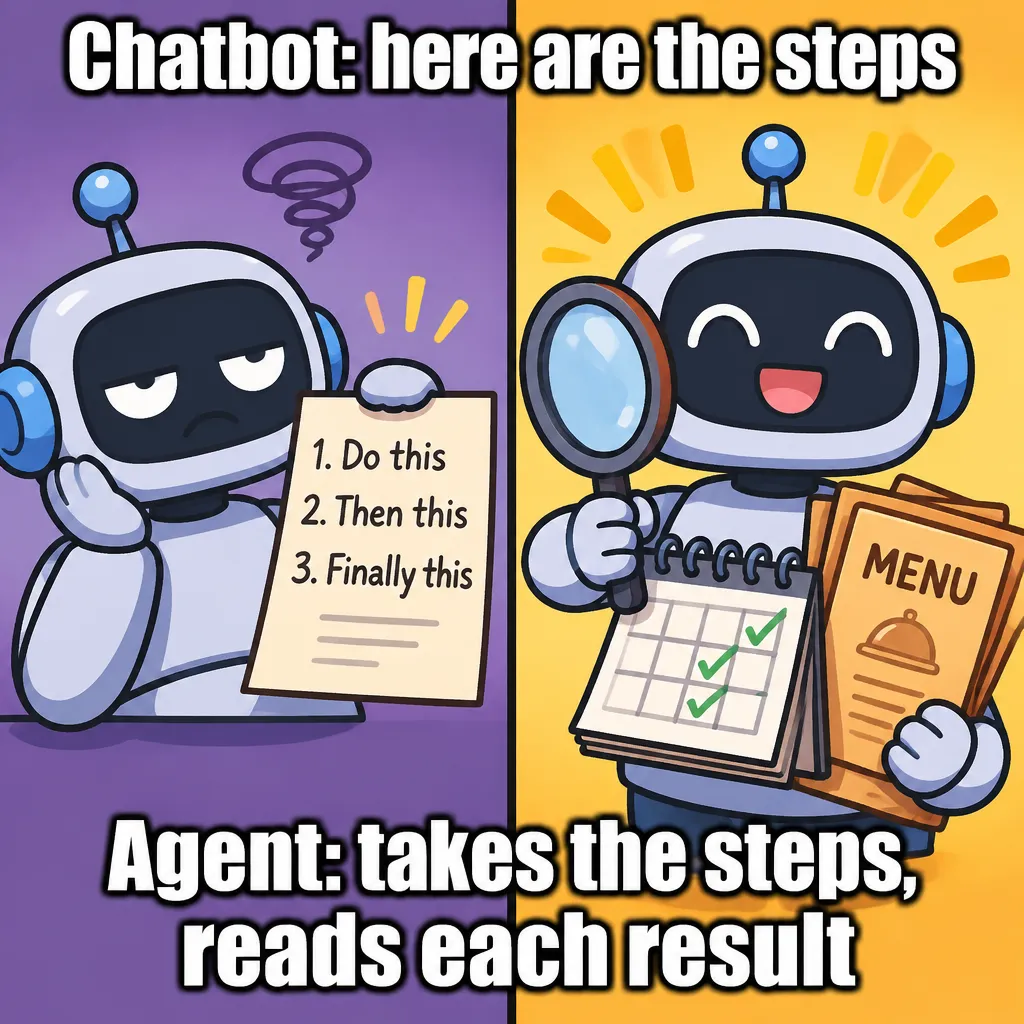
An AI agent is a language model running in a loop. It asks for a tool, sees the result, and decides what to do next, until the task is done. A plain chatbot gets your message and writes one reply. That's the whole turn.
The problem it solves: some jobs take many steps. "Find a dinner spot for six on Friday and add it to the group calendar" means searching, comparing, checking opening hours and creating an event. A chatbot can tell you those steps. An agent can try to do them.
One honest note: people use "agent" loosely. A chatbot that can run a single web search is somewhere in between. The line is fuzzy, and that's fine.
The mental model for this whole course: a new intern with a checklist. Fast, never tired, happy to run errands. Also new here. It can misread a step, report back too soon, or follow a note a stranger left on the desk.
When not to use one: when a single answer will do, or when a wrong step is costly and hard to undo. Asking for a recipe? A chatbot is fine. Paying, sending or deleting? Do it yourself, or make the agent ask you first. More steps means more chances for something to go wrong.
POV: you type "find a dinner spot for six on Friday and put it on the group calendar". Then you watch it search, open three menus, check opening hours and draft an event. You didn't click a thing. So who decided each step? A plan file? A tiny boss inside? Nope.
Take a guess
In an agent like this, what decides the next step?
No pressure. Guess now, and the lesson will show you if you were right.
so an agent is just a smarter chatbot
not smarter. it can be the same kind of model. the difference is the loop around it
what loop
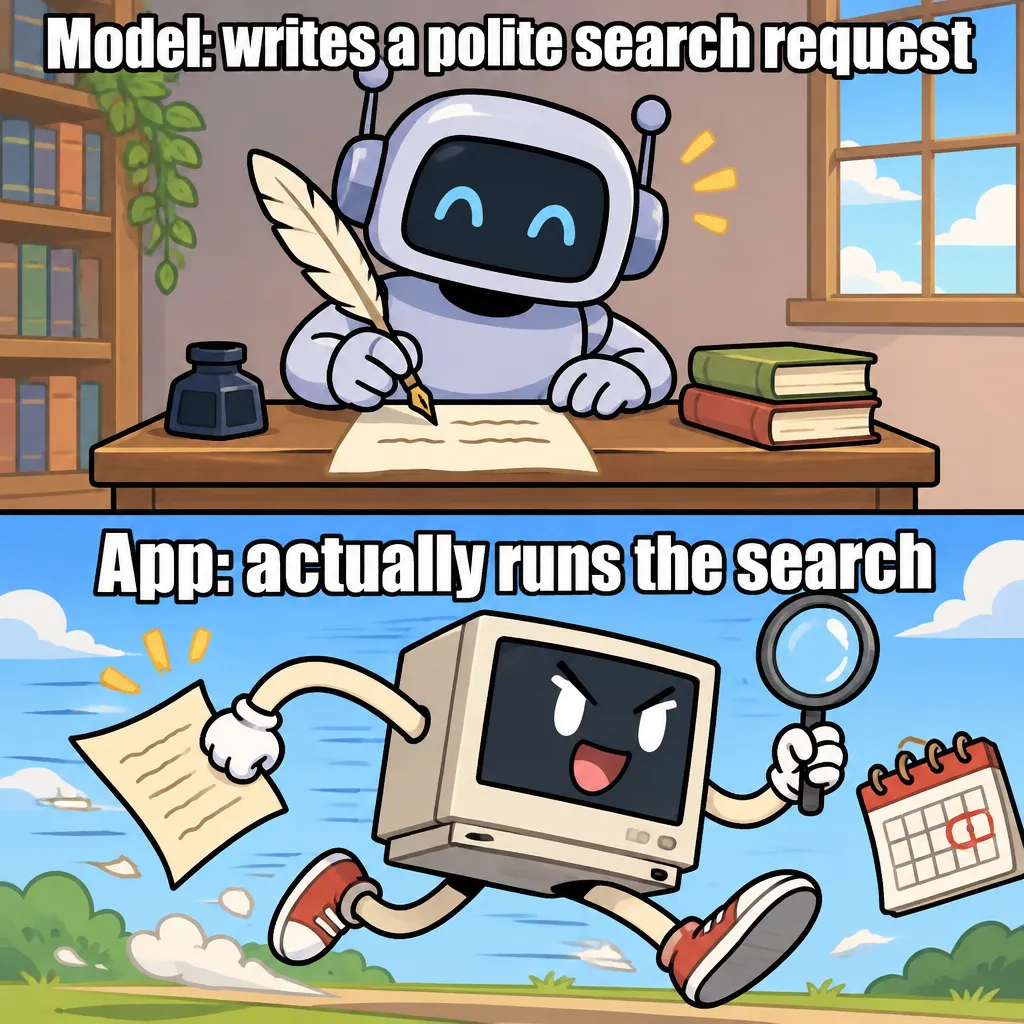
the app sends the model your task. the model replies with a tool request, like "search restaurants downtown". the app runs it and sends back the results
then what
the model reads the results and picks the next step. repeat until it says it's done, or hits a step limit the app set
so a chatbot with web search is an agent??
a tiny one, kind of. people don't agree where the line is 🤷
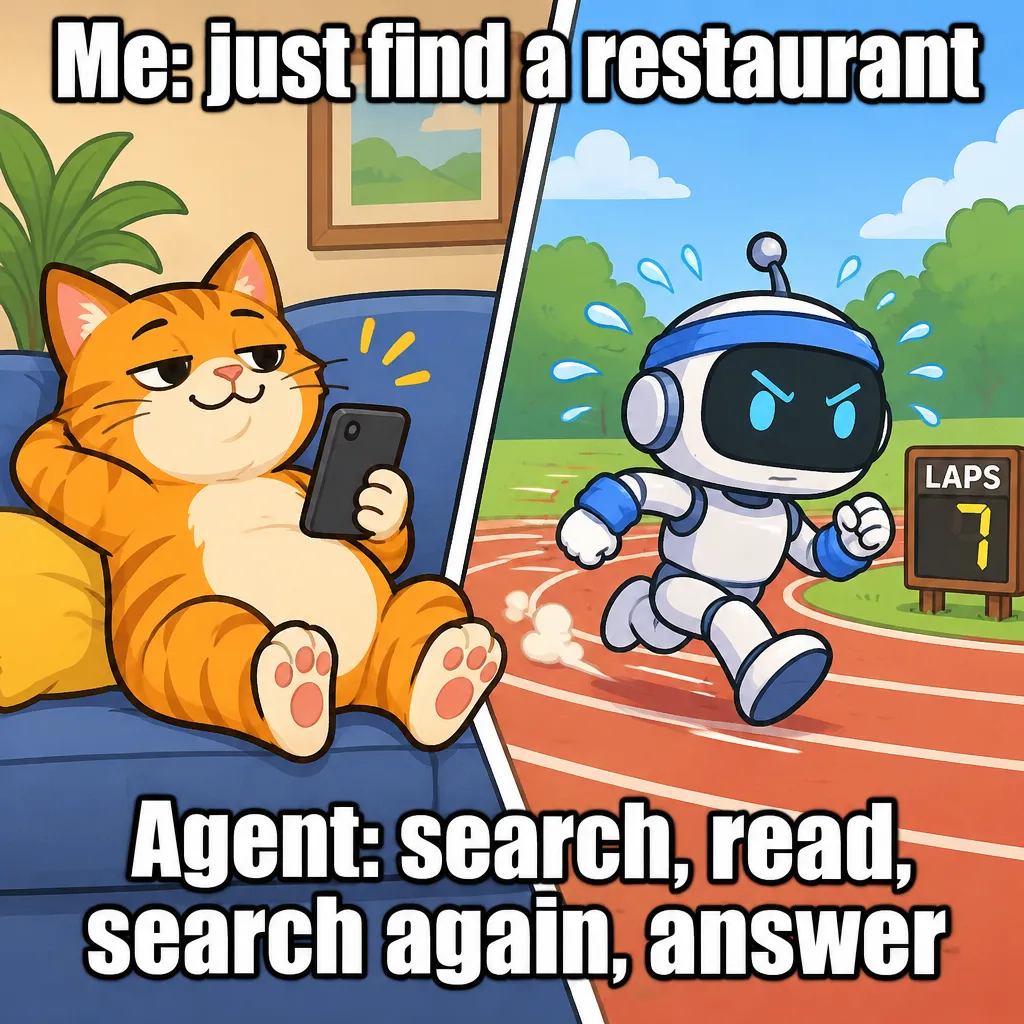
Here's one trip around the loop. The app sends the model your task, the steps so far, and a list of tools it may use. The model replies with either a tool request or a final answer. If it's a tool request, the app runs the tool and adds the result to what the model sees. Then it asks the model again. That repeats until there's a final answer, or the app's limit kicks in.
Predict, then reveal
Plot twist time. Everyone assumes the model itself clicks the buttons and runs the search. Does it?
What's the clearest difference between an agent and a chatbot that just replies?
Pick one answer.
Who actually runs a tool, like a web search?
Pick one answer.
FlashcardsIndex cardsFlashcards ⚡
Card 1 of 5Worth keeping
- An agent is a language model in a loop with tools. It doesn't have to be a smarter model.
- The model picks the next step. The app runs the tools and decides which ones exist.
- The line between a chatbot with tools and an agent is fuzzy, and people use the word loosely.
- Skip the agent when one answer will do, or when a wrong step would be costly to undo.
So the model writes "search restaurants" and the app runs it. But a language model only predicts text. How does it know which tools exist, and how to ask in a way the app can actually run?